
What to do in an emergency on the Trunk Road Network
Know what to do if something goes wrong on the road
Breaking down or being involved in a collision on the trunk road network can be frightening. Especially on busy, high‑speed roads. Many drivers aren’t sure what to do in that moment, or what help is available.
Get help quickly
By understanding the steps to take and knowing what to expect, you can stay safe, get help quickly and feel more confident if the unexpected happens.
Be prepared before heading out on the network
Being prepared for the unexpected is one of the most important things you can do before travelling on the trunk road network. Having a recovery service in place means help is available quickly if something goes wrong.
It’s also important to know how to respond in different situations. Before setting off, make sure you:
- Check your vehicle’s lights and tyres to ensure it’s road‑ready
- Pack an emergency travel kit to keep in your vehicle, in case of unexpected delays or breakdowns
- Keep your vehicle’s servicing up to date to reduce the risk of preventable issues
A little preparation can make a big difference if you find yourself in an emergency.
Emergency Roadside Telephone
If your vehicle breaks down or you’re involved in an incident, follow these steps to help keep yourself and others safe:
Move off the road if you can
Try to leave the carriageway by exiting the road, using a service area, or pulling into a hard shoulder or emergency area. Stop as far to the left as possible.
Position your vehicle safely
Turn your front wheels to the left, away from live traffic.
Make yourself visible
Switch on your hazard warning lights straight away. If it’s dark or foggy, also turn on your sidelights.
Get out and move to safety
When it’s safe to do so, all occupants should leave the vehicle using the left‑hand doors and move behind a safety barrier if one is available.
Get help quickly
Use an Emergency Roadside Telephone where available. This connects you directly to Traffic Scotland and helps emergency services locate you.
If there are no Emergency Roadside Telephones nearby, contact your breakdown provider in the first instance. Some vehicles have an SOS button which you can press. You can alsocall our Customer Careline on 0800 028 141 if these options are not available.
Call 999 immediately if your vehicle breaks down in a live traffic lane where you cannot reach an emergency area or place of safety, if you or your passengers are in immediate danger, or if someone is experiencing a life-threatening medical emergency.
Stay safe while you wait
Do not place a warning triangle on the road, as this can put you at additional risk on high‑speed roads.
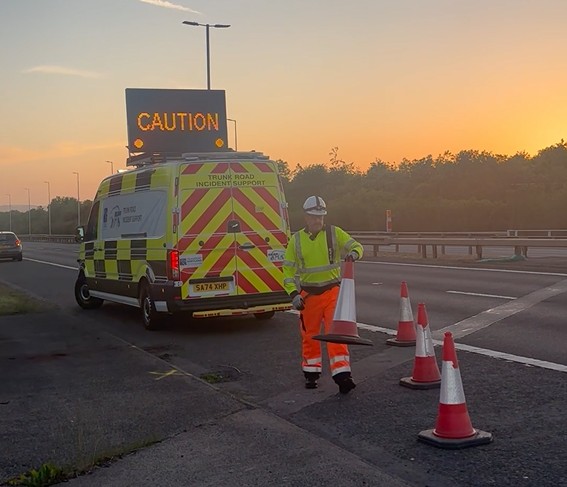
In some areas of the trunk road network, the Trunk Road Incident Support Service (TRISS) may attend to support road users who have broken down.
TRISS vehicles can position themselves behind your vehicle to provide an additional layer of protection from passing traffic, helping to improve safety while you wait for recovery.
They work alongside Traffic Scotland and are managed by Operating Companies to assist with incidents and keep the network moving as safely as possible.